- Shrikrupa Soc Rees, Khalapur, Panvel-II Raigad Raigarh MH 410206 IN
- gethonoraryphd@gmail.com

Phone Number
+91-8655502244
+91-7893528657
Email Address
gethonoraryphd@gmail.com
+91-8655502244
+91-7893528657
gethonoraryphd@gmail.com


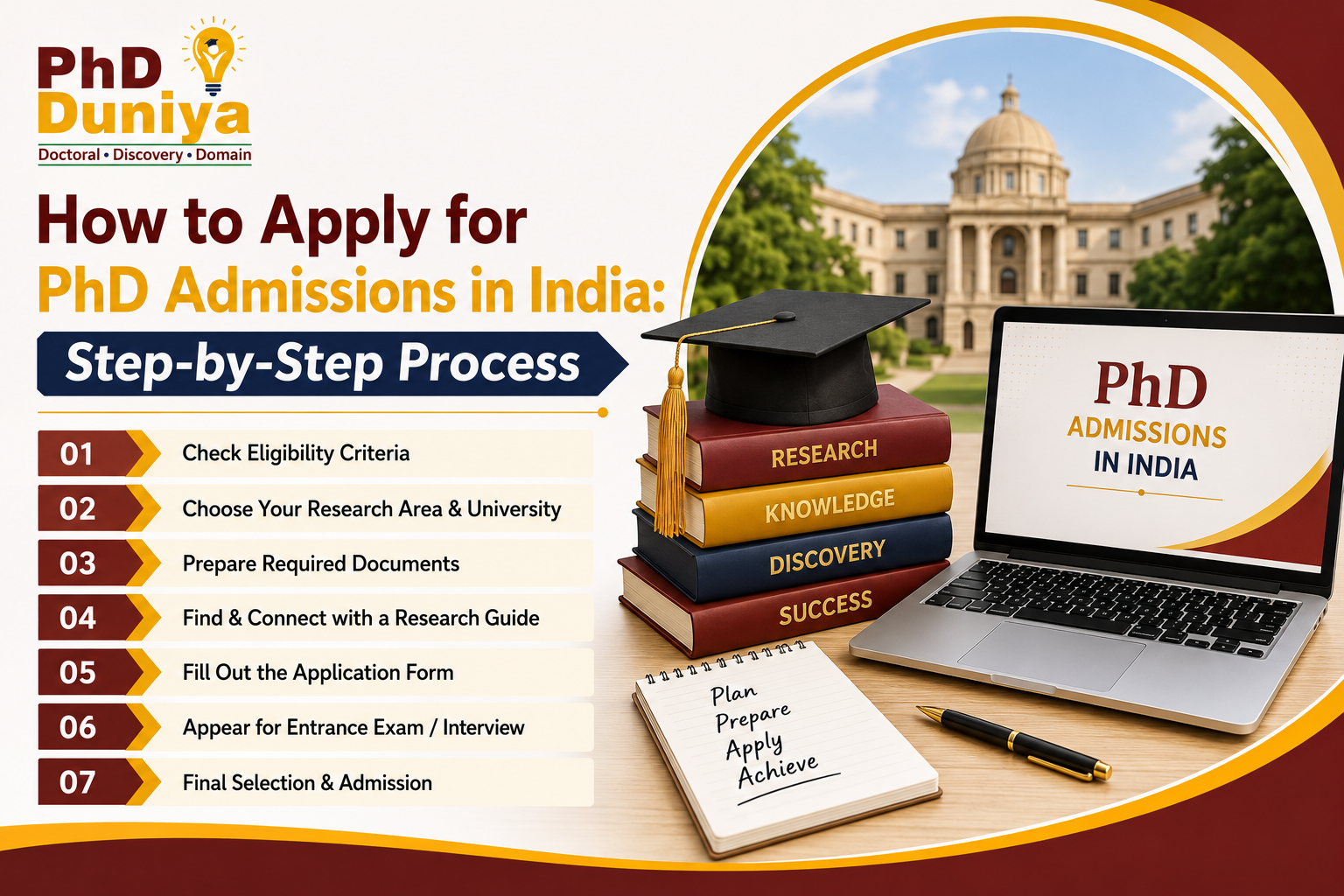
 by PhD Duniya
Pursuing a doctorate is a major academic and career decision, and understanding PhD admissions in India before you start applying can save you months of confusion. Every year, thousands of students aim to secure a seat in top universities and research institutes, but the process often feels scattered across different exams, portals, and eligibility rules.
This guide breaks down the entire journey into clear, manageable steps from checking eligibility to submitting your final application so you know exactly what to do and when to do it.
1. Understand the Basic Eligibility Criteria
Before applying, confirm that you meet the minimum academic requirements. While specifics vary by university and subject, most institutions expect the following:
Always check the specific eligibility page of the university you're targeting, since rules can differ between central universities, state universities, IITs, and private institutions.
2. Clear the Required Entrance Exams
Almost all PhD admissions in India require candidates to qualify for a standardized test. Common exams include:
Some institutes also accept a valid JRF/NET score in place of their own entrance test, so check the admission notification carefully before registering separately.
3. Shortlist Universities and Research Areas
Choosing the right university is as important as clearing the exam. Consider:
Shortlist 5–8 universities so you have backup options if your first choice doesn't work out.
4. Prepare a Strong Research Proposal (SOP)
Many universities require a Statement of Purpose or a brief research proposal at the time of application. This document should include:
A well-written proposal often plays a decisive role during the interview round, so avoid generic templates and personalize it for each application.
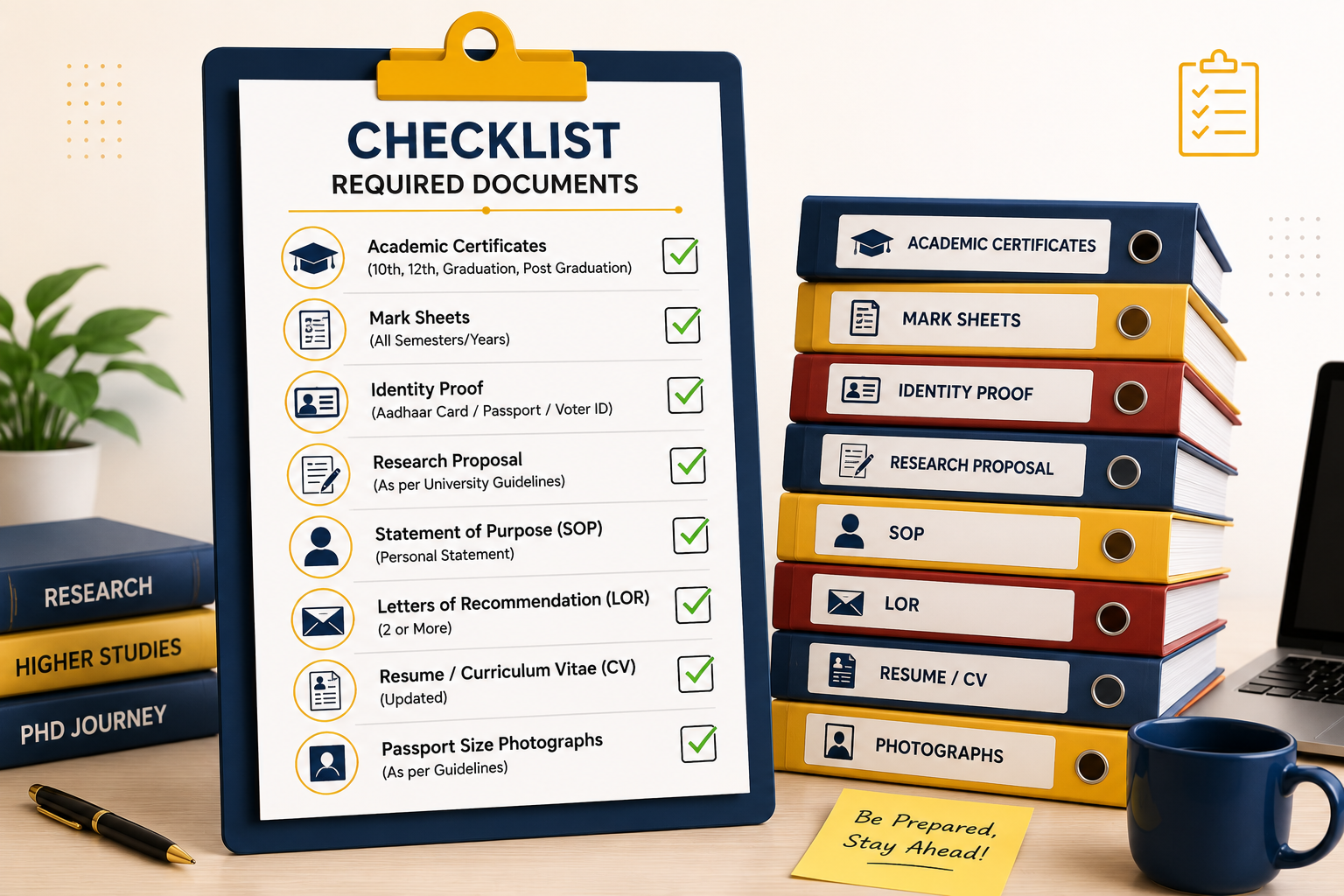
5. Gather the Required Documents
Keep the following documents ready in scanned digital format, as most applications are submitted online:
Document | Purpose |
Mark sheets and degree certificates | Academic proof |
Entrance exam scorecard (NET/GATE/CSIR-NET, etc.) | Eligibility proof |
Statement of Purpose | Research intent |
Letters of recommendation | Academic/professional endorsement |
Identity proof | Verification |
Category certificate (if applicable) | Reservation benefits |
Passport-size photograph | Application form |
Missing or incorrectly formatted documents are one of the most common reasons applications get rejected, so double-check each requirement listed on the university's official portal.
6. Fill Out the Application Form
Once documents are ready, complete the online application on the university's official admission portal. While doing this:
7. Attend the Written Test and/or Interview
Most universities conduct a two-stage selection process:
Be prepared to discuss your proposed research area in depth, along with your academic background and career goals.
8. Check the Final Merit List and Complete Registration
After the interview, universities release a merit list based on combined performance in the entrance exam, written test, and interview. If selected:
Tips to Improve Your Chances of Selection
For students looking for consolidated updates on entrance exams, notifications, and application deadlines across universities, platforms like PhDDuniya can be a useful starting point to stay organized during the admission season.

Getting into a PhD program in India involves more than just clearing an entrance exam; it requires careful planning around eligibility, university selection, documentation, and interview preparation. By following this step-by-step process, you can approach PhD admissions in India with clarity and confidence, avoiding last-minute surprises during the application season.
Start early, stay organized, and tailor your application to each university's specific requirements to maximize your chances of securing a seat.
1. What is the minimum qualification required for PhD admissions in India?
A master's degree in a relevant subject with the required minimum percentage, along with a qualifying score in an accepted entrance exam.
2. Is UGC-NET compulsory for PhD admission?
Not always. Many universities accept it, but they also conduct their own entrance exams as an alternative route.
3. Can I pursue a PhD directly after a bachelor's degree?
Some institutions allow it for candidates with a four-year bachelor's degree and a high CGPA, subject to specific eligibility norms.
4. How long does the PhD admission process take in India?
It typically takes 2–4 months from application to final merit list, depending on the university and exam cycle.
5. Are PhD scholarships available in India?
Yes, options include UGC-JRF, CSIR fellowships, institute-specific fellowships, and state government scholarships.