- Shrikrupa Soc Rees, Khalapur, Panvel-II Raigad Raigarh MH 410206 IN
- gethonoraryphd@gmail.com

Phone Number
+91-8655502244
+91-7893528657
Email Address
gethonoraryphd@gmail.com
+91-8655502244
+91-7893528657
gethonoraryphd@gmail.com



For many accomplished professionals, receiving an honorary doctorate feels like the ultimate recognition of a career's worth of impact. But unlike a traditional PhD, an honorary doctorate isn't something you enroll in, study for, or complete coursework toward; it's a distinction conferred by a university to honor exceptional achievement or contribution to society.
That distinction creates a lot of confusion. People search for how to "apply" or "get" an honorary doctorate, when the real process is almost the opposite: it's about being recognized, not admitted. This guide walks professionals through how the process actually works in the United States, what universities look for, how to build a profile that makes you nomination-worthy, and what red flags to watch for along the way.
What Is an Honorary Doctorate?
An honorary doctorate, sometimes called honoris causa ("for the sake of the honor"), is an academic degree a university awards without requiring the recipient to complete a degree program, dissertation, or research. It's a symbolic honor rather than an earned academic credential.
Universities typically award these degrees to recognize:
Because it isn't earned through study, an honorary doctorate does not carry the same academic weight as a research-based PhD or professional doctorate, and recipients are generally expected to use the title carefully, if at all, in professional or academic settings.
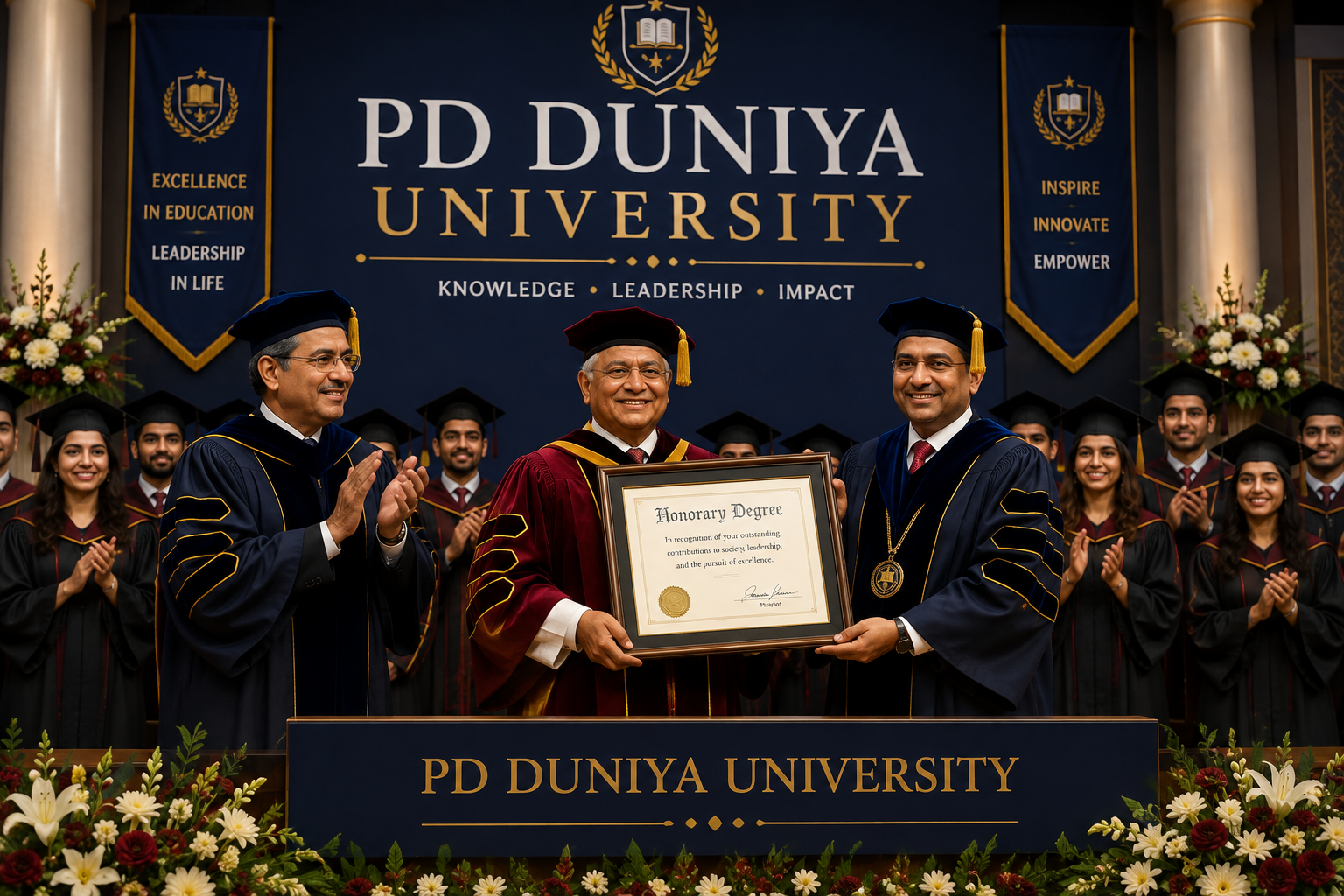
Most American universities follow a fairly similar path when it comes to honorary degrees:
This process commonly takes anywhere from six months to two years, and confidentiality is often maintained until an offer is formally extended.
Criteria vary by institution, but common threads appear across most honorary degree policies:
Some universities, such as Georgetown, expect nominees to stand out in at least two distinct categories, for example, professional achievement and public service, rather than excelling in just one.
Since you generally can't apply directly, the real strategy is to build a career and public profile that makes you a natural candidate for nomination. Professionals pursuing this recognition typically focus on:
Resources like PhDDuniya can help professionals understand these nomination pathways and prepare a stronger, more credible profile before pursuing recognition.
Highly selective universities, the Ivy League among them, tend to reserve honorary degrees for individuals with major, often international, recognition in their field. These institutions rarely accept public nominations and instead rely on internal faculty and trustee recommendations. For most professionals, mid-sized universities, regional institutions, or schools with a specific connection to their industry or community offer a more realistic and still meaningful path to recognition.

Because the honorary doctorate process isn't standardized or regulated the way earned degrees are, it has also attracted less scrupulous operators. Before pursuing or accepting any honorary degree offer, watch for these warning signs:
If an institution asks for a "donation" as part of the process, it's worth researching thoroughly, since even some legitimate universities do welcome philanthropic contributions from honorees. The key difference is whether the recognition itself was earned through genuine review or simply purchased.
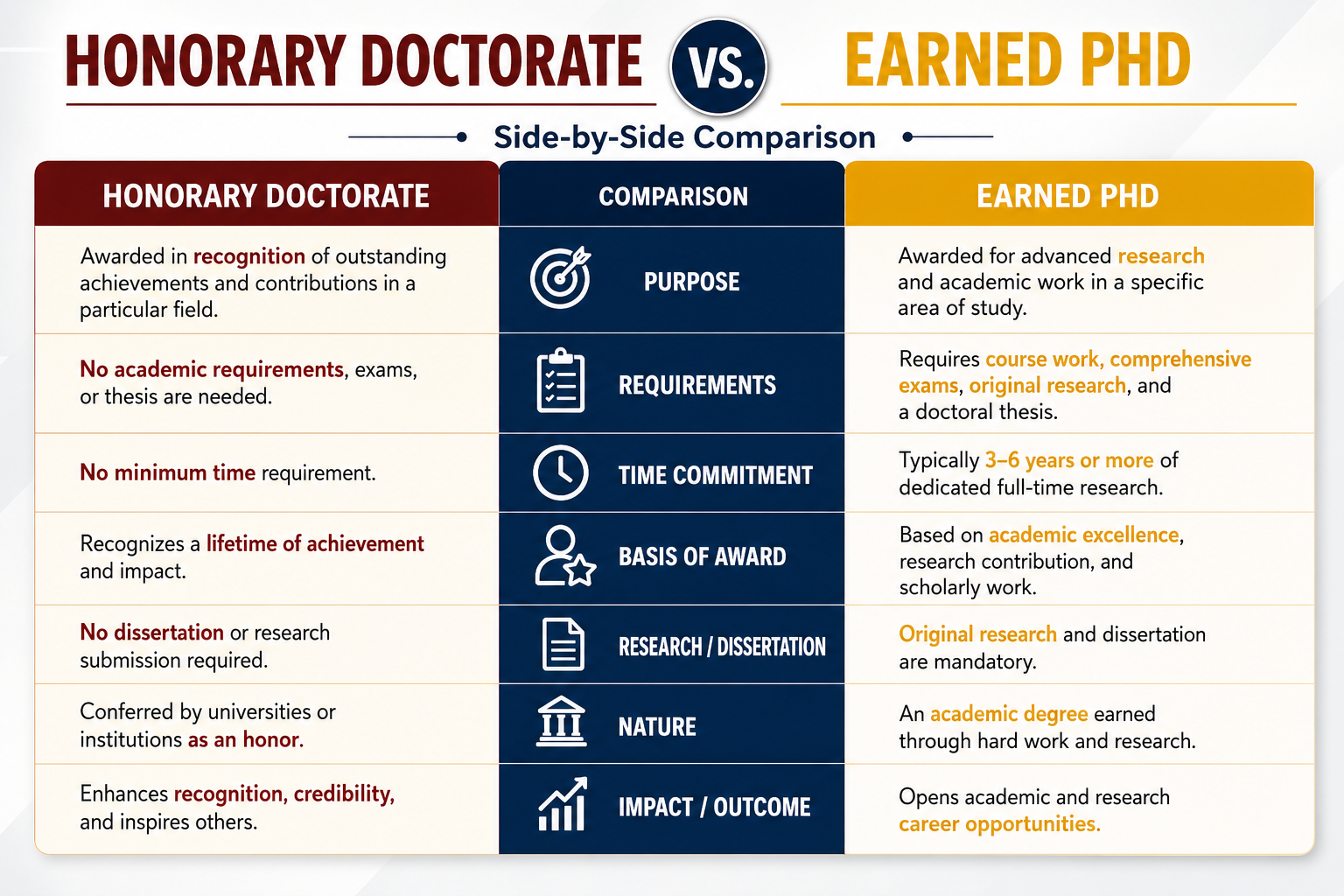
Aspect | Honorary Doctorate | Earned PhD |
Requirements | No coursework or research required | Years of coursework, research, and a dissertation |
Path to receive it | Nomination and committee approval | Formal application, admission, and completion |
Purpose | Symbolic recognition of achievement | Academic credential demonstrating original research |
Use of "Dr." title | Generally discouraged in professional/academic contexts | Standard and expected |
Timeline | Months to a couple of years from nomination | Typically 4–7 years of study |
Receiving an honorary doctorate in the USA isn't something you can apply for in the traditional sense; it's a recognition that comes from building a career of genuine, sustained impact and the right institutional relationships over time. Understanding how universities actually select honorees, what they look for, and which red flags to avoid can help professionals pursue this recognition thoughtfully and credibly, rather than falling for shortcuts that undermine its meaning.
If you're exploring this path, focus on the substance of your work first. Recognition, when it's genuine, tends to follow.
1. Can I apply directly for an honorary doctorate?
Generally, no. Most reputable universities only accept third-party nominations from faculty, alumni, or trustees, not direct applications from the individual.
2. Does an Honorary Doctorate let me use the title "Dr."?
Technically, most universities intend the honor to be symbolic, and using the title in professional or academic settings is often discouraged or restricted, even though some recipients do so informally.
3. How long does the honorary doctorate process take?
From nomination to conferral, the process commonly takes six months to two years, depending on the institution's review cycle and commencement schedule.
4. Do I need a connection to the university?
Not always, but a genuine relationship through collaboration, mentorship, guest lectures, or shared mission often strengthens a nomination.
5. Are honorary doctorates recognized internationally?
Recognition varies by country and institution. They are widely understood as symbolic honors rather than academic credentials, so international recognition depends on context.
 by PhD Duniya